


Best Standing Desk for Better Health: How to Choose and Use One Safely
A desk that only sits or only stands misses the point: your body generally benefits more from changing position than from holding either position all day.
The best standing desk for better health is the one that makes it easy for you to alternate between sitting and standing throughout the workday. Electric desks, manual standing desks and desk converters can all work well when they are used consistently.
In this guide, we’ll compare the main types of standing desks, explain their benefits, show you how to choose the right option for your space and work style, and share practical tips for setting up your desk correctly.
The Best Standing Desks: What Actually Works
Three main types of standing desks cover most home and office setups: electric standing desks, manual standing desks and desk converters.
Each offers a different balance of convenience, price and adjustability. The most important factor is not how advanced the desk looks, but whether you actually use it to change positions throughout the day.
| Desk Type | Health Benefit | Price Range |
|---|---|---|
| Electric | Easy to adjust, making it more convenient to alternate positions | Higher upfront cost |
| Manual | Provides the same postural benefit when adjusted regularly | Lower to mid cost |
| Desk converter | Converts an existing desk into a sit-stand workspace | Lower upfront cost |
Electric Desks for Effortless Height Changes
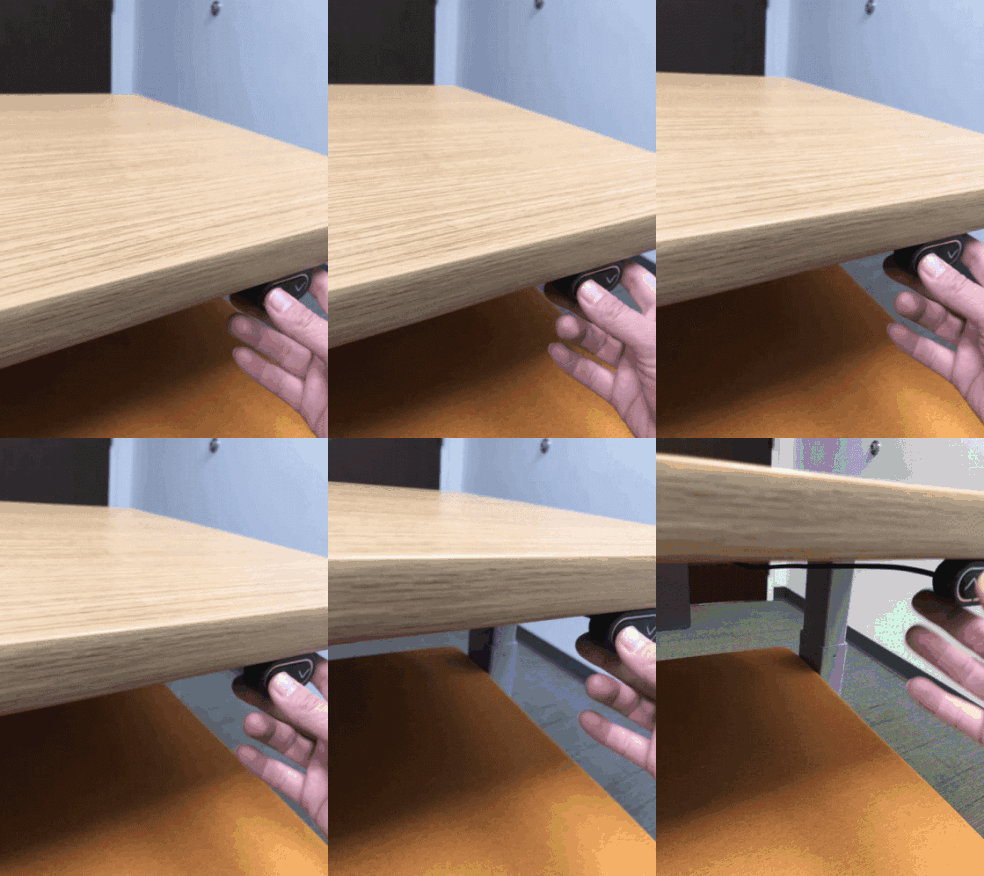
Electric standing desks adjust with the push of a button, making it easier to switch between sitting and standing throughout the day.
This convenience can make a real difference because you’re more likely to change position when the process takes only a few seconds.
Manual Desks for Budget-Friendly Reliability
Manual standing desks generally cost less than electric models and don’t require a motor.
The main drawback is that adjusting the desk takes more effort. If raising and lowering the desk becomes inconvenient, you may find yourself staying in one position for longer than intended.
Desk Converters for Renters and Small Spaces
A standing desk converter sits on top of an existing desk and allows you to raise your keyboard, monitor and other equipment when you want to stand.
This makes desk converters particularly useful for renters, small apartments, shared workspaces and anyone who doesn’t want to replace their existing desk.

How Work Style and Space Affect Your Desk Choice
The right standing desk depends on more than features and reviews.
Before buying, consider:
- How many hours you spend working at your desk
- How much space you have available
- Whether the desk is shared with another person
- How frequently you expect to switch between sitting and standing
- Your budget
- Whether you need a permanent or temporary setup
Full-Time Remote Workers vs. Hybrid Workers
Someone working from home five days a week may benefit more from a full electric standing desk because the convenience of quick height adjustments becomes valuable when the desk is used for many hours every day.
A hybrid worker who spends only part of the week at home may find a manual standing desk or desk converter provides everything they need.
Ultimately, the desk that actually gets adjusted throughout the day is more useful than a more expensive model that stays at one height.
Small Apartments vs. Dedicated Home Offices
A large standing desk may not be practical in a small apartment, particularly if your workspace is part of a living room or shared area.
A desk converter can be a more flexible solution because it sits on your existing desk and can be moved or stored when you’re finished working.
A dedicated home office gives you more freedom to use a full-size electric standing desk and accommodate additional equipment and cables.
Shared Desks vs. Single-User Setups
Shared workspaces can benefit from electric desks with programmable height presets.
Different users can save their preferred sitting and standing heights, making it easier for everyone to use the same desk comfortably.
For a single-user workspace, a manual desk can work just as well if you are comfortable adjusting it regularly.
Your chair also matters. A standing desk works best as part of a complete ergonomic workstation rather than as a standalone solution.
Health Benefits: What Matters Most
Not every standing desk habit provides the same benefit. Simply standing for hours doesn’t automatically make a workspace healthier.
The goal should be to alternate between sitting and standing and avoid staying in one position for too long.
| Impact Level | Habit | Why It Matters |
|---|---|---|
| High | Alternating sitting and standing every 30–60 minutes | Can help reduce discomfort associated with prolonged static positioning |
| Medium | Correct desk height and screen position | Helps prevent additional neck, shoulder and wrist strain |
| Low | Standing still for hours | Does not solve the problems associated with prolonged static posture |
Desk Habits With the Highest Health Impact
A practical starting routine is:
- Begin with around two hours of standing spread throughout the day
- Gradually work toward more standing time if comfortable
- Change position every 30–60 minutes
- Adjust your desk and monitor correctly
- Avoid treating standing as a replacement for movement
The goal isn’t to stand for as long as possible. It’s to move between positions regularly.
Habits That Are Often Overrated
Standing all day is not necessarily healthier than sitting all day.
Remaining completely still for hours, whether you’re sitting or standing, can contribute to discomfort and fatigue. A standing desk is most useful when it encourages you to change position rather than simply replacing a seated static posture with a standing one.
Think of a standing desk as a tool for more movement and position changes, not a reason to stand continuously.
Signs Your Desk Setup Is Hurting Your Health
A poor workstation setup can create small amounts of strain that build throughout the day.
Watch for these warning signs:
- Back or neck discomfort that regularly appears during the workday
- Spending many hours sitting or standing without changing position
- A monitor positioned too high or too low
- Shoulders that remain tense while working
- Wrists or elbows positioned awkwardly
If you notice these problems, your desk setup may need adjustment rather than simply more standing time.
Persistent Back or Neck Pain by Afternoon
Discomfort that gradually increases throughout the workday can be a sign that your desk, chair, monitor or working position needs adjustment.
Changing position throughout the day can help reduce the strain associated with remaining static.
If pain is persistent, severe or worsening, don’t assume a standing desk is the solution. Consider getting appropriate professional advice.
Sitting for Long Periods Without Breaks
Spending hours in one position can contribute to discomfort.
Rather than trying to eliminate sitting completely, use your standing desk to create regular changes in position throughout your working day.
Screen Height Causing Poor Neck Posture
A monitor positioned too low can encourage you to look downward for extended periods.
A monitor that is too high can force you to tilt your head upward.
Your screen should generally be positioned around eye level or slightly below so that your neck can remain in a comfortable, neutral position.
How to Set Up a Standing Desk Correctly
A standing desk only helps if it is set up correctly.
Start by adjusting the desk so that your elbows are approximately at a 90-degree angle while your shoulders remain relaxed.
Your keyboard and mouse should be positioned comfortably within reach without requiring you to lean forward.
Your monitor should be positioned around eye level or slightly below to help keep your neck in a neutral position.
Most importantly, don’t forget to move. Even the perfect ergonomic setup cannot replace regular changes in position.
Ready to Build a Healthier Workspace?
The best standing desk for better health is not necessarily the most expensive or feature-packed model.
It’s the one that fits your space, your budget and your working habits — and makes it easy to alternate between sitting and standing throughout the day.
Whether you choose an electric standing desk, a manual model or a desk converter, focus on adjustability, proper setup and regular movement.
Shop Standing Desks
Frequently Asked Questions
What is the best standing desk for better health?
There is no single best standing desk for everyone.
Electric standing desks are convenient because they make switching between sitting and standing easy. Manual desks can provide similar benefits when adjusted regularly, while desk converters are useful for smaller spaces and existing workstations.
The most important factor is choosing a desk that you will actually adjust and use consistently.
Do standing desks actually improve posture and health?
Standing desks can be useful when they encourage you to alternate between sitting and standing.
However, standing alone does not automatically improve posture. You can still have poor posture while standing.
Correct desk height, monitor position and regular movement are all important parts of a healthier workstation.
How long should you stand at a standing desk each day?
A practical starting point is around two hours of standing spread throughout the day, gradually increasing if it feels comfortable.
Rather than focusing on a specific maximum amount of standing, aim to alternate positions regularly. Changing position every 30–60 minutes can be more useful than having one long standing session.
What is the best standing desk for small spaces?
A desk converter is often the most practical choice for a small workspace because it sits on top of an existing desk.
It can be moved or stored when you’re not working, making it particularly useful for apartments, shared rooms and temporary workspaces.
Are electric standing desks worth the extra cost?
For people who use their desk every day, an electric standing desk can be worth the additional cost because it makes height adjustments quick and convenient.
A manual desk can provide similar postural benefits, but you have to be willing to adjust it regularly.
The main advantage of an electric model is convenience rather than an additional health benefit from the motor itself.
How do I set the correct height for a standing desk?
Start by adjusting the desk so your elbows are approximately at a 90-degree angle while your shoulders remain relaxed.
Your monitor should be positioned around eye level or slightly below.
Use these measurements as a starting point and make small adjustments based on what feels comfortable while maintaining a neutral posture.
Can a standing desk help with back or neck pain?
It may help when discomfort is related to spending too long in one static position.
Alternating between sitting and standing can reduce the strain associated with remaining in one position for extended periods.
However, a standing desk isn’t a treatment for every type of back or neck pain. Persistent or significant pain should be assessed appropriately.
What is the easiest standing desk to use for beginners?
An electric standing desk with programmable height presets is generally the easiest option for beginners.
Saved height settings make it simple to switch between sitting and standing without repeatedly finding the correct height.
If you’re new to standing desks, start gradually rather than trying to stand for most of the workday immediately.
Final Thoughts
The best standing desk for better health is one that helps you change position regularly and fits naturally into your working routine.
Electric desks offer convenience, manual desks provide a more affordable option, and desk converters are ideal for smaller or shared spaces.
But the desk itself is only part of the equation.
Set your workstation up correctly, keep your monitor at a comfortable height, alternate between sitting and standing, and make regular movement part of your workday.
A healthier workspace isn’t about standing all day. It’s about moving more, changing position and creating a setup that works for your body and your lifestyle.
Recommended books for further reading:
- Perfect Health
- The Power of Habit: Why We Do What We Do, and How to Change
- The 7 Habits of Highly Effective People
- High Performance Habits
- Breaking the Habit of Being Yourself
Recommended Products:
